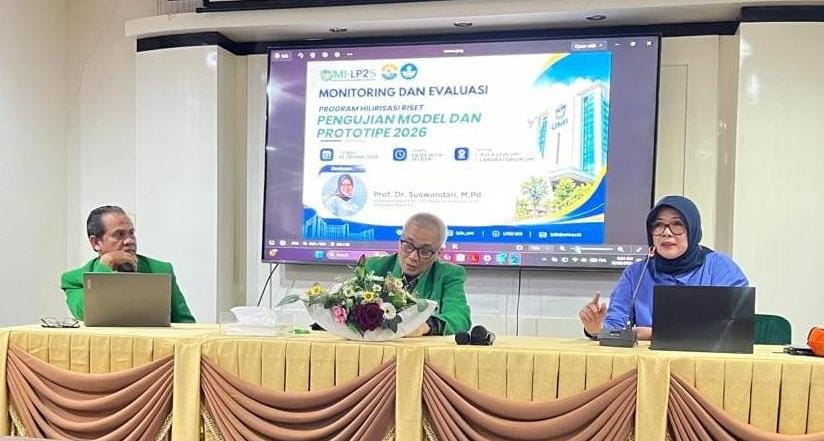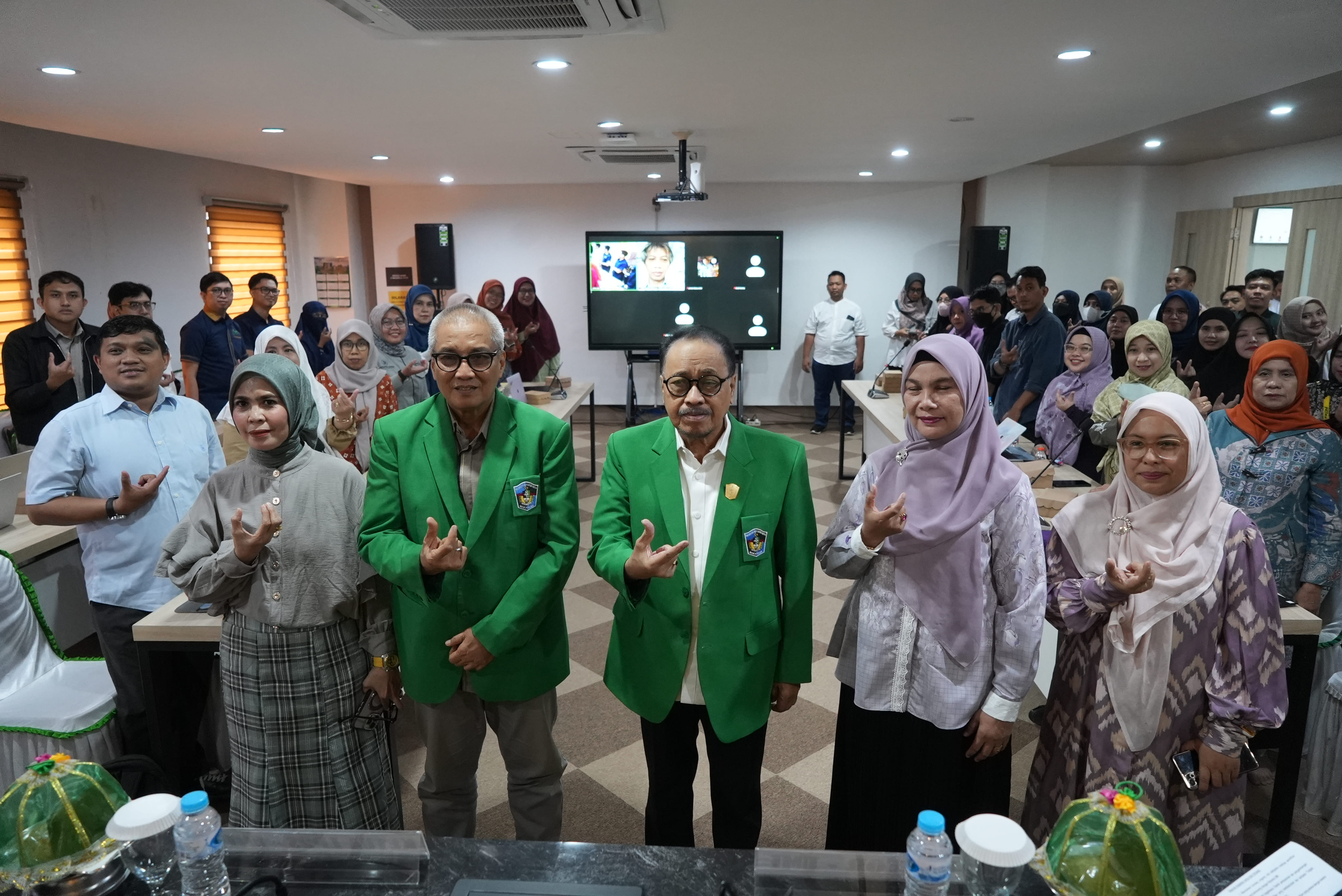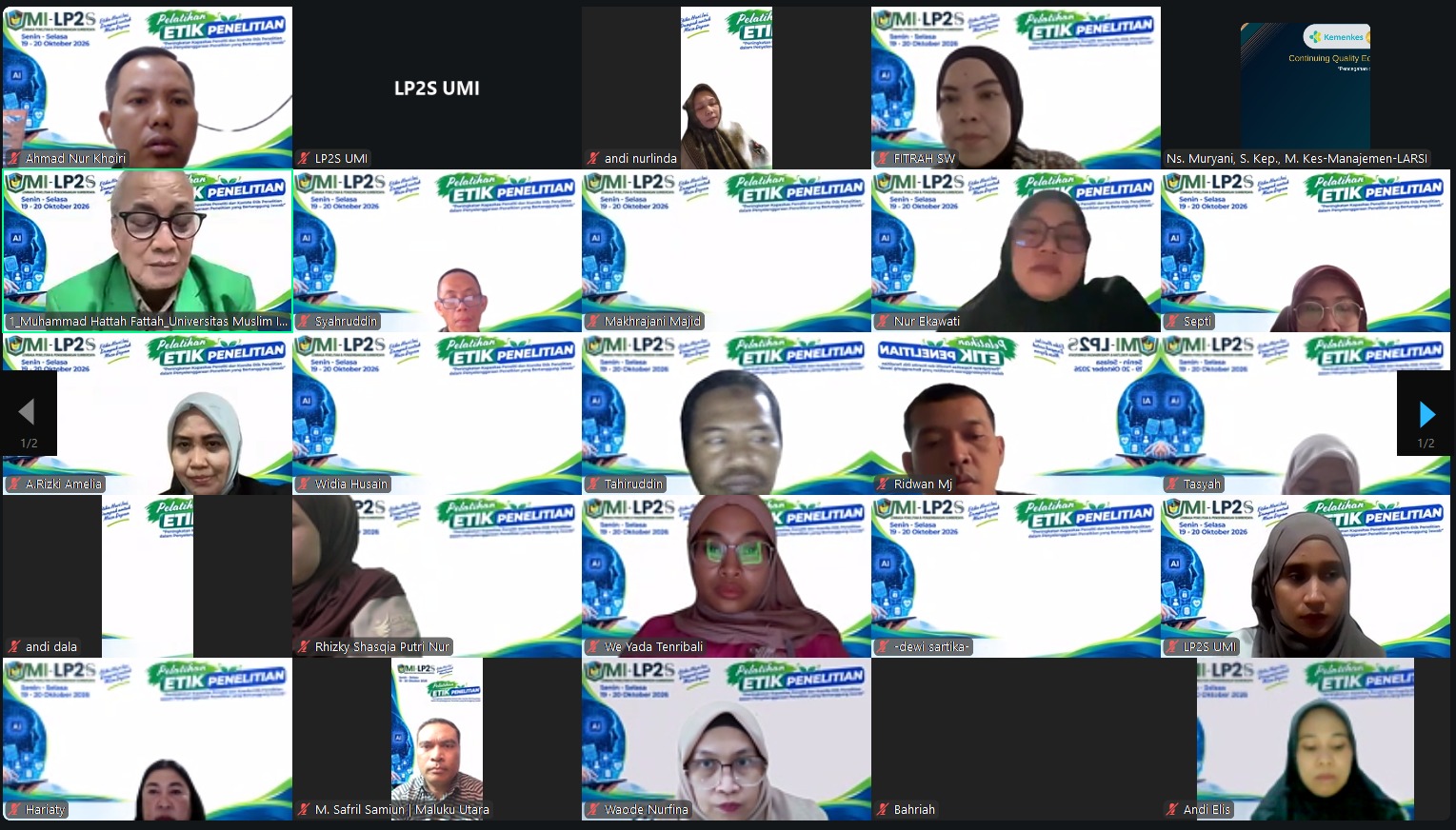


79 participants from various regions in Indonesia took partOnline Coursesentitled 'Qualitative Research Methodology Workshop' which was held by the Indonesian Muslim University (UMI) Research and Resource Development Institute (LP2S), Monday (27/7/2020).
The workshop was opened directly by the Head of LP2S UMI, Prof. Dr. H. Syahnur Said, MSi. This present resource person, Dr. Ari Kamayanti, A.Md., SE., MM., MSA., AK., CA, Director of the Peneleh Research Institute who is also a Lecturer at the Malang State Polytechnic.
In his speech, Prof. Syahnur said that this workshop activity was the third activity and aimed to improve lecturers' understanding and scientific skills in the field of research, especially qualitative research methodology.

"Research is the spirit and essence of lecturers. Research is a systematic activity or process for solving problems carried out by applying scientific methods," he said.
This professor at the UMI Faculty of Economics and Business said that this activity only presented one resource person so that training participants could follow the flow of the material in a structured and neat manner. "We deliberately appointed a single resource person for this 3 (three) day training so that you can follow in a coherent manner how philosophy leads to the presentation of qualitative research," added Prof. Syahnur.
79 participants attendedonline coursesThis was attended by Indonesian Muslim University lecturers and lecturers from outside UMI, including; Mataram University, Islamic University of Malang, STIE Amkop, Unifa, and several representatives from PT Districts/Cities throughout South Sulawesi.
Meanwhile, Dr. Ari Kamayanti, A.Md., SE., MM., MSA., AK., CA, as the resource person, started the material by conveying the philosophy of qualitative research that every activity carried out depends on the intention, including carrying out research. Bilateral research is research that believes that certain values must be upheld, put into action, therefore the aim of the research must be to move the Hijrah (change towards religious and national goodness).
It goes on to say that the qualitative approach exists on a continuum (between subjective-objective to very subjective). For qualitative researchers, science does not have to be objective, because objectivity does not exist, and if objectivity does not exist then the form of measurement (quantity) is no longer important.
‘Qualitative research is much more subjective than quantitative research or surveys. Because qualitative research uses very different methods from collecting information, especially individuals, in using in-depth interviews.
"Dr Ari also conveyed the ethics of qualitative research, namely conveying the purpose of the research, prior permission before recording, taking notes and the obligation to protect information," he explained.
(LP2S UMI)