By Proposing Team:
Chairman: Dr. Nurmiati Muchlis, SKM., M.Kes
Member: Prof. Dr. AR. Ir. Naidah Naing, ST., M.Si., IAI., IPU
Dr. Ir. Irma Nur Afiah, MT, IPM., ASEAN Eng.
Az-Zahra Dea I Gabrichs
Lisa Alfianita
Orange
1. Executive Summary
This study assesses the feasibility of implementing the concept of inclusive, safe and fair health service quality through servicescape innovation in Makassar City health facilities. The resulting model integrates aspects of health, architecture (aesthetics), and industrial technology by taking into account the anthropometric data of the elderly as well as environmental measurements (temperature, humidity, lighting, noise).
The analysis results show that the current physical environmental conditions do not fully meet comfort and safety standards. However, with the application of anthropometric-ergonomic principles and design interventions, this concept is declared feasible to be applied to improve patient safety and cooperative behavior of health workers and vulnerable patients.
2. Background
The physical environment (servicescape) is an important element in health services. Inappropriate room design can increase the risk of accidents, trigger human error, and hinder communication between health workers and patients, especially vulnerable groups (pregnant women, the elderly, people with disabilities).
In Makassar, health services face challenges: hot waiting rooms, uneven lighting, high noise, and facilities that are not anthropometrically friendly for the elderly. Therefore, a multidisciplinary-based servicescape innovation model is needed to create inclusive and equitable health services.
3. Goals
1. Produce a servicescape innovation model that supports cooperative behavior between nurses and patients.
2. Increase patient safety, especially in vulnerable groups.
3. Develop a health service concept based on anthropometry and ergonomics.
4. Provide recommendations for evidence-based service space design policies (evidence-based design).
4. Methodology
Mixed-Method:
Quantitative: Survey of 300 respondents (nurses, elderly patients, pregnant women, disabled), anthropometric & ergonomic measurements, SEM analysis (AMOS, Mplus).
Qualitative: Observation, FGD, in-depth interviews, workshops.
Main Informants: Director of Daya Regional Hospital, Health Service, head of community health center, nurses, vulnerable patients.
Data Analysis: Phenomenology for the integration of servicescape, cooperative behavior, and patient safety.
5. Service Product Market
1. Main Market Segment: RSUD, community health centers, clinics in Makassar.
2. Potential Segment: Health facilities in the South Sulawesi region and nationally.
3. Target Group: Vulnerable patients, health workers, health facility management.
4. Market Demand: The high need for elderly & disability friendly services is in line with demands for hospital/health center accreditation.
6. Feasibility Considerations
A. Technological Aspects
1. Anthropometric & ergonomic technology for facility design.
2. Smart healthcare: temperature sensors, automatic lighting, digital queuing system.
3. Accessibility technology: wheelchair ramp, large font information screen, voice guidance.
B. Environmental Aspects (Architecture & Aesthetics)
1. Inclusive waiting room, even lighting, healthy ventilation.
2. Calming aesthetics (colors, natural lighting).
3. Wayfinding is clear & disability friendly.
C. Social Aspects
1. Increase the comfort of health worker-patient interactions.
2. Reduce service discrimination.
3. Increase public trust.
D. Legal & Regulatory Aspects
1. Law no. 36/2009 concerning Health.
2. Minister of Health Regulation regarding accreditation of hospitals & health centers.
3. SNI related to anthropometry & ergonomics.
4. Accessibility regulations for people with disabilities.
7. Supporting Data
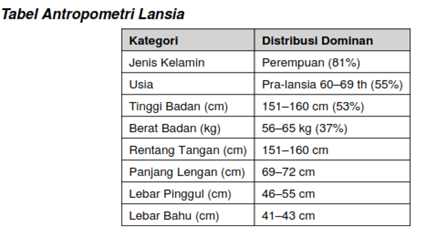
7.1 Anthropometric Data for the Elderly (116 Respondents)
1. The majority are women (81%).
2. Most age: pre-elderly (60–69 years, 55%).
3. Dominant height 151–160 cm (53%).
4. Most body weight is 56–65 kg (37%).
5. Hand span 151–160 cm, arm length 69–72 cm.
6. Hip width 46–55 cm, shoulder width 41–43 cm.

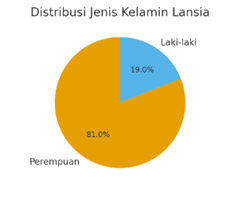
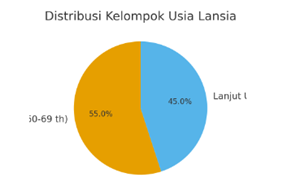
👉 Implications: Ergonomic chairs, tables, handrails and waiting areas are needed according to the average size of the elderly.
7.2 Servicescape Data (5 Community Health Centers in Makassar)
Temperature: 28.9–30.7°C → above comfort standards (24–26°C).
1. Risks: heat, reduces concentration, uncomfortable for the elderly.
2. Humidity: 60–65% → tends to be high.
3. Risk: growth of fungus & bacteria.
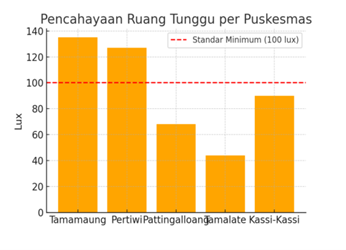
4. Lighting: 44–173 lux → uneven, some spots <100 lux.
5. Risks: visual disturbances, work errors.
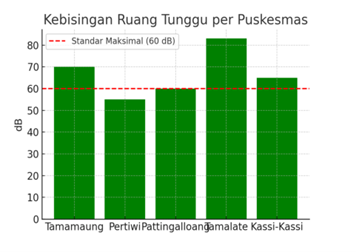
6. Noise: 39–83 dB → exceeds the safe limit of 60 dB.
7. Risk: disrupted communication, increased stress.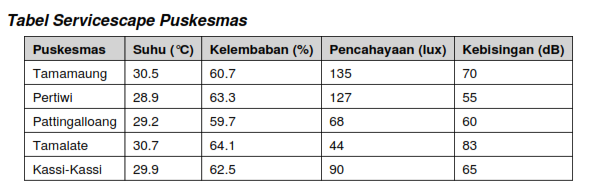
👉 Implications: Improvements in ventilation, room cooling, lighting distribution and acoustic systems are needed.
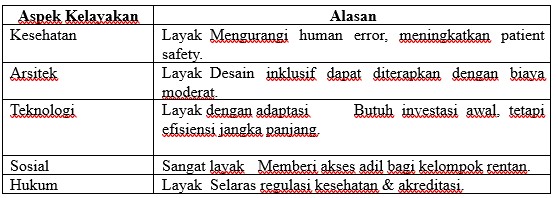
8. Feasibility Analysis
9. Risk Analysis & Mitigation
1. Financial: Renovation costs → Mitigation: gradual funding, CSR.
2. Social: Health worker resistance → Mitigation: training & workshops.
3. Technology: Digital dependency → Mitigation: manual backup system.
10. Conclusion & Recommendations
This study concludes that the concept of inclusive, safe and equitable health service quality based on anthropometry–ergonomics is feasible to be applied in Makassar City health facilities.
Implementation recommendations:
1. Pilot project at Daya Hospital & pilot health center.
2. Preparation of SOPs and inclusive servicescape design guidelines.
3. Integration of technology & HR training.
4. Continuous evaluation with patient safety & cooperative behavior indicators.